As part of Fotografiska Berlin’s Emerging Berlin program, Carola Lampe’s Tell Me What To See explores the shifting relationship between human perception, photography, and technology. We spoke with the artist about images, AI, and who shapes the way we see.
We look at hundreds of images every day without necessarily thinking about where they come from. Some are photographed, some manipulated, some generated entirely by machines. Most of the time, they appear side by side on the same screen.
Carola Lampe has been interested in what this does to our perception since 2019. Then, she began working on the ongoing series Tell Me What To See. What started with questions about data, algorithms, and machine vision has changed over time, as the technologies themselves have evolved. Today, the distinction between a photograph and an artificially generated image is no longer always visible. For Lampe, that uncertainty is part of the work. For the project, she moves between street photography, staged scenes, digital manipulation, 3D environments, AI-generated imagery, and video. She places images created through these very different processes side by side, without necessarily revealing how they were made. Instead of resolving that tension, Lampe leaves space for the viewer to make their own connections.
Currently on view at Fotografiska Berlin as part of Emerging Berlin, the exhibition Tell Me What To See brings these questions into the former Tacheles, a place with its own history of art, experimentation and change. We met Carola to talk about how machines see, what happens when we begin to see alongside them, and why she remains curious, but cautious, about the technologies she uses herself.
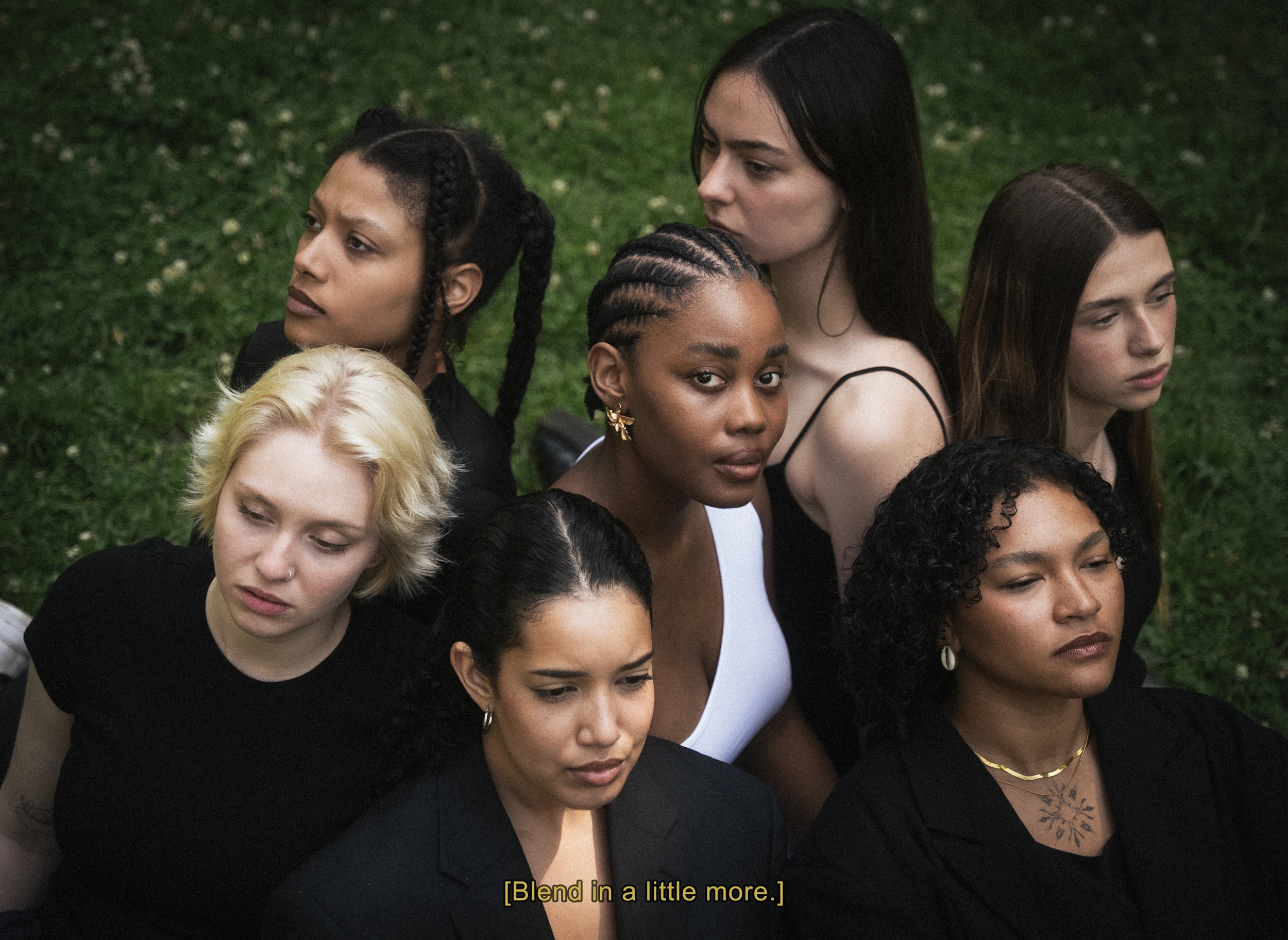
Delali Amegah - “Blend in a little more“
In Conversation with Carola Lampe
The human being and the reflection on what it means to be human within a social context are recurring themes in your work. What role do personal stories of other people play in your research, and how do they relate to the digital images, data and information you work with?
My research is often quite theoretical at first. I read a lot about technology, how current developments are being discussed, what questions are emerging, and where potential problems lie. I also stay up to date, which is becoming increasingly difficult because there is so much information. I am interested in accounts and perspectives from people who are directly involved with these technologies – for example, insider reports from within technology companies, discussionsin specialized forums, as well as the perspectives of theorists and researchers. And then, of course, I look ateveryday life. I observe developments that I think I can see in how we interact with each other, personally, socially, and within society. Those observations also find their way into the work. So I approach the subject from different perspectives. For me, bringing in personal accounts and observations is also a way of introducing a human perspective into the work and contrasting it with the more abstract nature of digital images, data, and information. By bringing these different kinds of material together and placing them in new contexts and constellations, I try to explore what digitalization can mean for us on a human level. I am interested in what emerges from these encounters and in making the influence that digital technologies can have on our perception, behavior, and relationships tangible.
Your work often creates spaces of perception where it is not immediately clear what we are actually looking at. How do these spaces emerge, and what role do the different media you work with play?
Perception is very important to me. I keep different levels of perception and interpretation open, so that the work can reveal itself differently to each person. At least that is the idea and something I aim for.
I come from different media and ways of working, and I use different forms of image generation to approach a subject. I am interested in images where you might not immediately know what you are looking at, what they are supposed to mean, or whether they even belong together. When these different images meet, something else can emerge. I used to work in choreography, performance art, and dance, and that approach still shows up in my work today. Similar to choreography, I bring together different images and visual layers that might not make sense together at first. Through that combination, new fields of perception can emerge that go beyond the individual image. In a way, this also gives the viewer a more active position because they have to create those connections themselves.

Adedolapo Boluwatife Abimbola - “Invitation to Invade”
With Tell Me What To See, your work enters Fotografiska Berlin and the former Tacheles. What does this particular setting add to the work for you?
What I really like about the space is that unfinished quality: the wallpaper, the grids, the staircase. There is something rough about it. My work, especially the video, also has something very direct to it, maybe even something punk. So it connects to Tacheles’ history. At the same time, Fotografiska is a museum today, which brings another kind of seriousness. I find that contrast interesting. On one side is the building’s anarchic history; on the other, theinstitutional museum context. In relation to my work, the space supports that punk quality but also gives it another kind of seriousness.
New technologies continue to open up new possibilities for producing images. Where do you draw boundaries in your own work?
I started Tell Me What To See in 2019. That was before ChatGPT, and before the generative AI boom we are experiencing today. It was more about data, algorithms, and different forms of image generation.
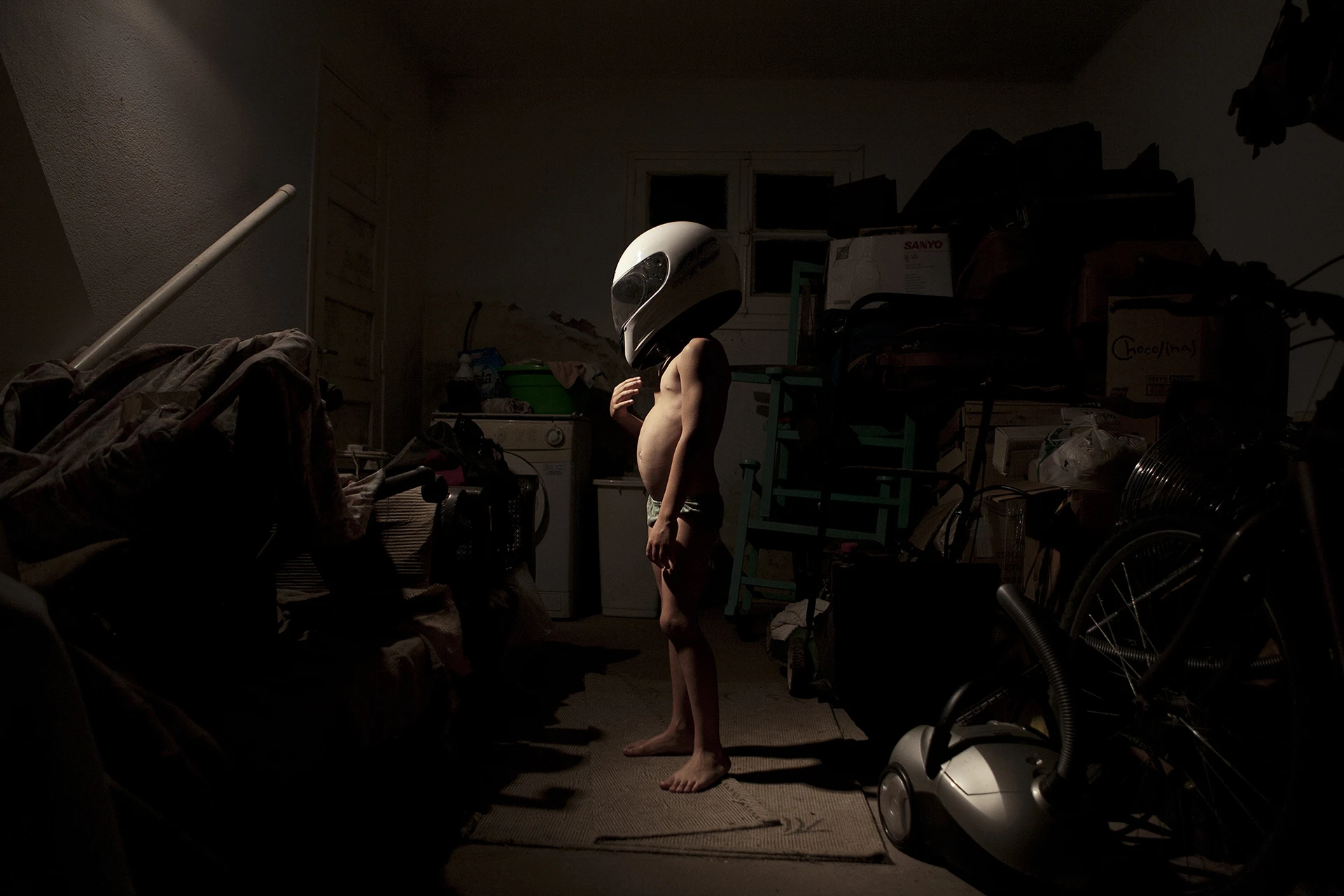
Florencia Trincheri - “Childhood is future”
One central question for me was how machines actually see. What do they see, and how is that different from what we see? That is where the title came from.
Today, the question has another dimension. It is also about whether machines begin to tell us how to see, not directly, of course. But if we constantly interact with these systems, our own perception might change. Especially now that images are increasingly generated through language, I’d like to know whether we are also adapting ourselves to these systems. And whether, indirectly, they begin to determine how or what we see.
To close with our classic VAKUUM question: What does a vacuum mean to you in the context of your work?
A vacuum, to me, initially has something closed off about it, something separated from everything around it. In relation to technology, I also think of a matrix that we move within. Some theories suggest we might already exist within some matrix without knowing it. A vacuum could be thought of that way too.
Carola Lampe, Tell Me What To See, 14 August to 31 October 2026, Fotografiska Berlin
Tell Me What To See brings together different stages and forms of Carola Lampe’s image-making. She began by photographing on the streets, using classic street photography as a starting point. She then moved to carefully staged studio scenes and later to AI-generated images, screenshots from 3D environments, and digital manipulation.
The result makes it deliberately difficult to tell where photographed reality ends and something constructed begins. Some images reveal their artificial origin on closer inspection, while others leave the distinction unresolved. Rather than giving a clear answer, the exhibition asks what happens to our perception when that distinction becomes less reliable.
The exhibition is part of Emerging Berlin at Fotografiska Berlin and is curated by Marie Luise Mayer, Exhibitions Manager at Fotografiska Berlin, in collaboration with Carola Lampe. It is produced in partnership with IFA Berlin and Volkswagen R, with WhiteWall as photography print partner.
On view through 31 October 2026 at Fotografiska Berlin.