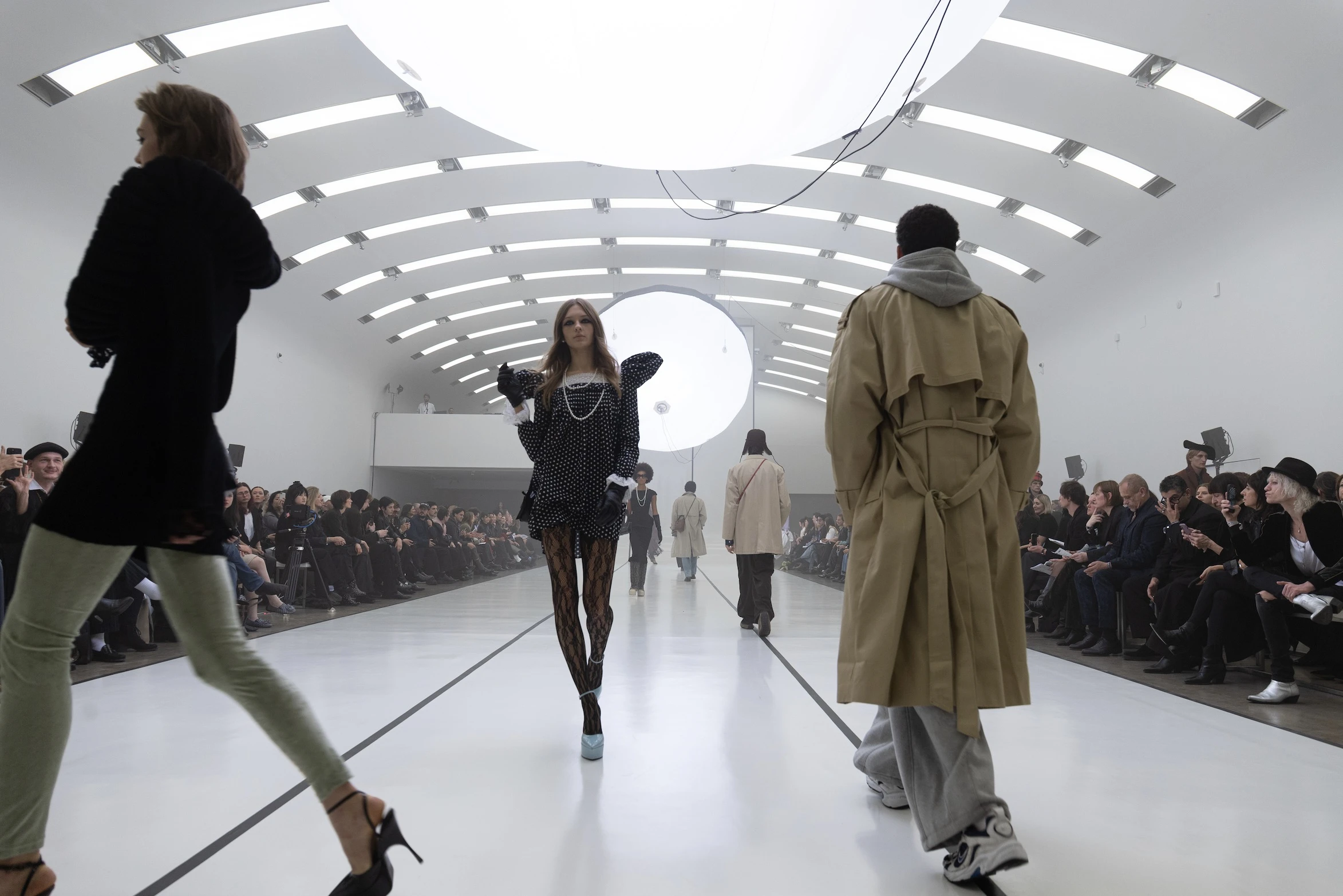
An evening in November, Vienna’s fashion scene is gathered at the Austrian Fashion Association’s annual awards show. The atmosphere is thick with anticipation, reverence. Gigantic softbox balloons hang over the runway; everything is bathed in a soft, warm glow – the brainchild of Berlin’s Tor Studio, who create consistently intricate and immersive stage designs. It feels like the set of a major commercial shoot, the kind usually reserved for luxury automotive campaigns – figures, this year’s main sponsor is Range Rover. The music playing is ethereal, the hall slowly fills up.
- Photo by Fritz Enzo Kargl:
Every year, the awards show doubles as a fashion show too. Labels selected the previous year, guaranteed funding, present a series of looks back-to-back – a direct visual demonstration of how national cultural budgets for fashion are allocated, and to whom. Before the runway starts, Swedish artist and writer Sanna Helena Berger opens the evening, reading a short essay. The biggest narrative arc of the night, however, is delivered by Vice-Chancellor and Minister of Culture Andreas Babler; the winners of the Outstanding Artist Award are crowned: Sagan Vienna. The Ministry of Culture awards a second prize: Florentina Leitner is awarded the Fashion Award of the City of Vienna. Acceptance speeches follow, bouquets handed out; once the winners are back in their seats, the head of the Austrian Fashion Association Camille Boyer introduces the labels walking the show. We’ve rounded up our highlights below.
Lore knows how to seduce in Wool
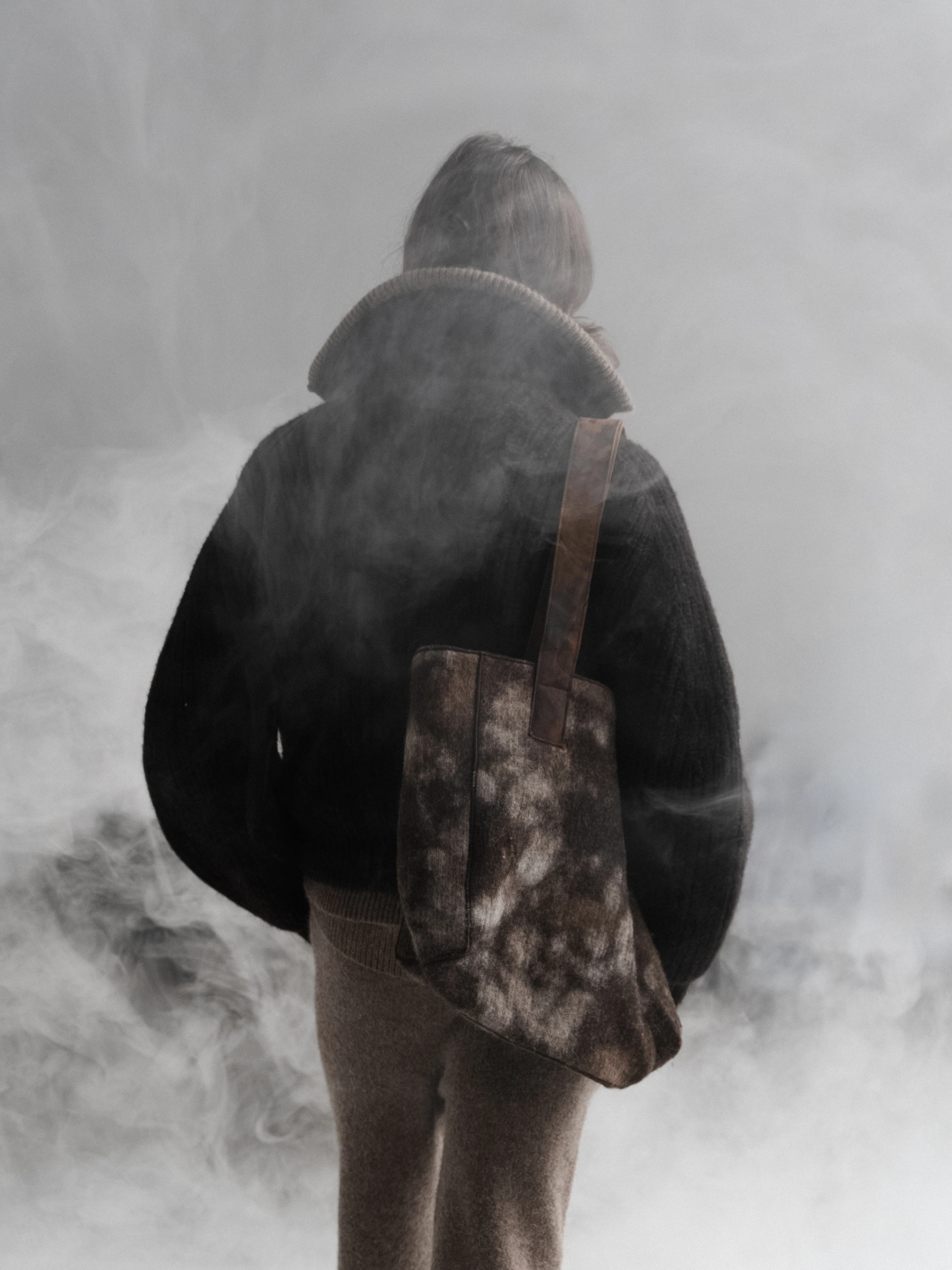
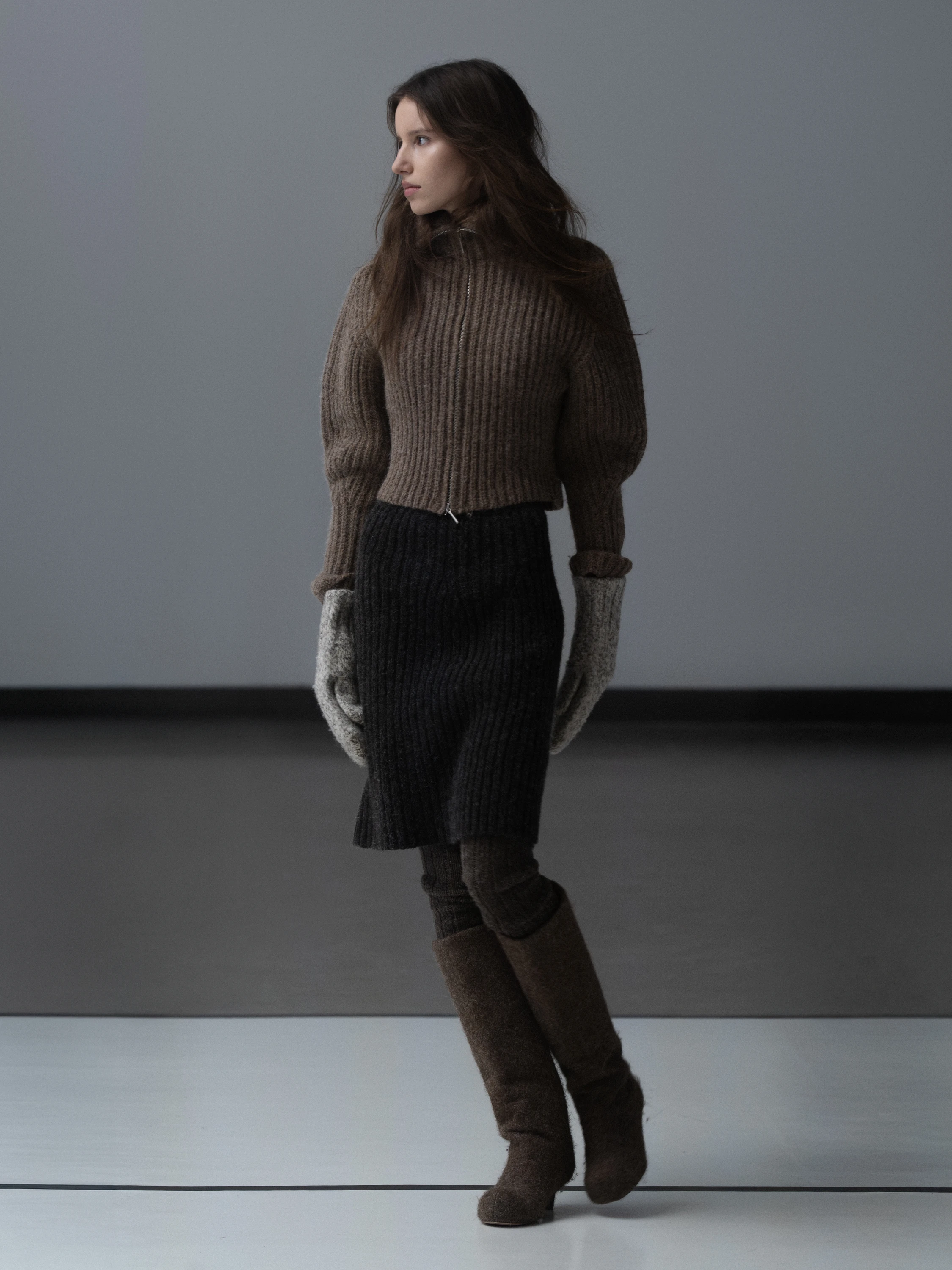
The lights cool, the first look emerges: knitwear, head to toe. Inga Nemirovskaia, founder of Lore, has spent years experimenting with fibers, her focus specifically on sheep’s wool. In Austria and Germany it mostly ends up as waste, it would simply be too complicated to ship it to somewhere with a stronger textile production infrastructure. After knitwear design studies at London’s Central Saint Martins, and a decade working alongside designers like Haider Ackermann, Ann Demeulemeester, and Alber Elbaz, she understands not only the processes, the waste, the cycles, but also masters intelligent pattern-cutting, refined silhouettes. Her looks are sculptural woollen conglomerates: leisurewear with an elegant twist, defined by sandy hues, extra-long sleeves, oversized pockets, made of wool sourced directly from Austrian sheep.
- Photo by:
- Daniel Wendt
- Photo by:
- Daniel Wendt
Florentina Leitner loves Nerds, Princesses, and the subversive "Girl Gaze"
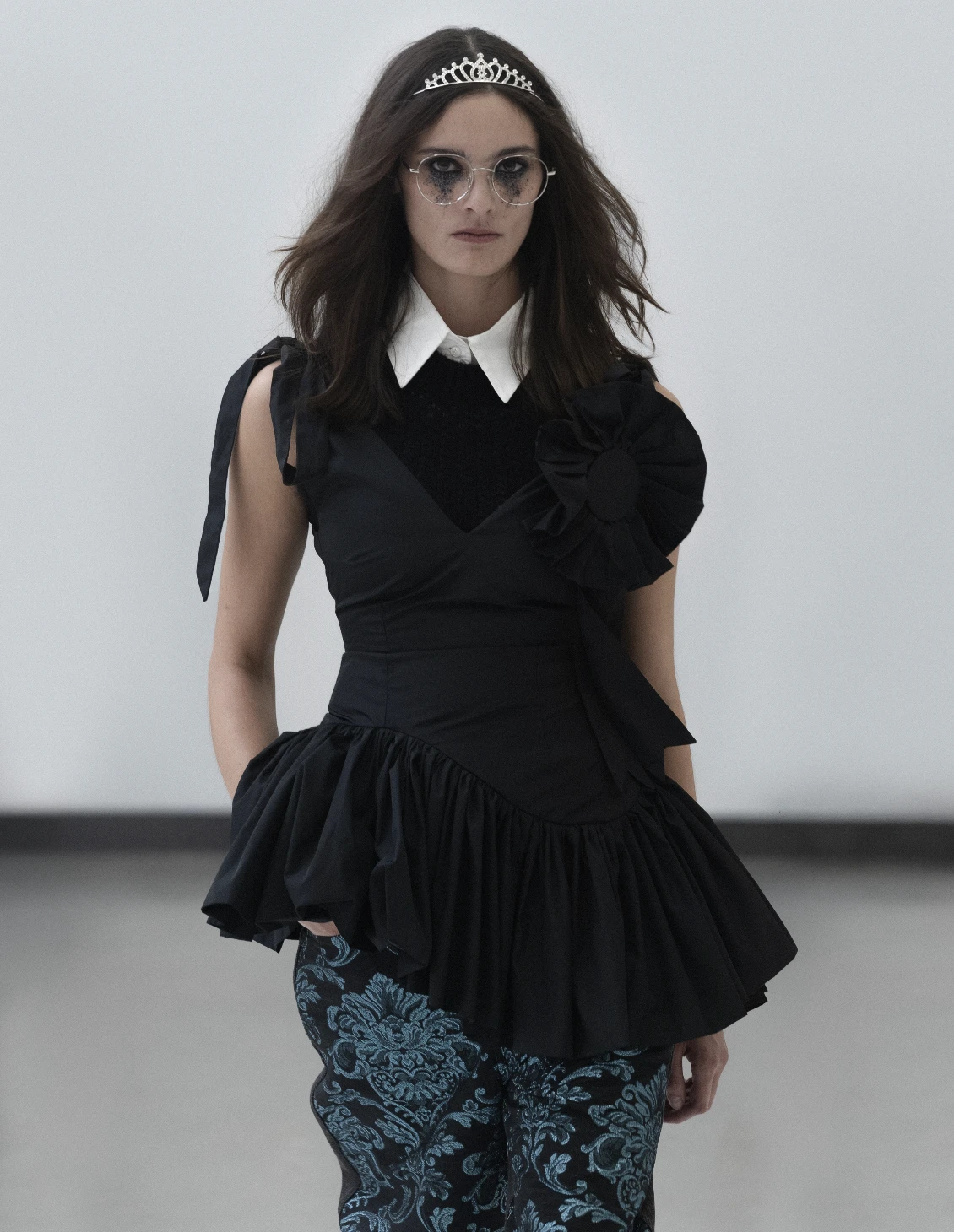
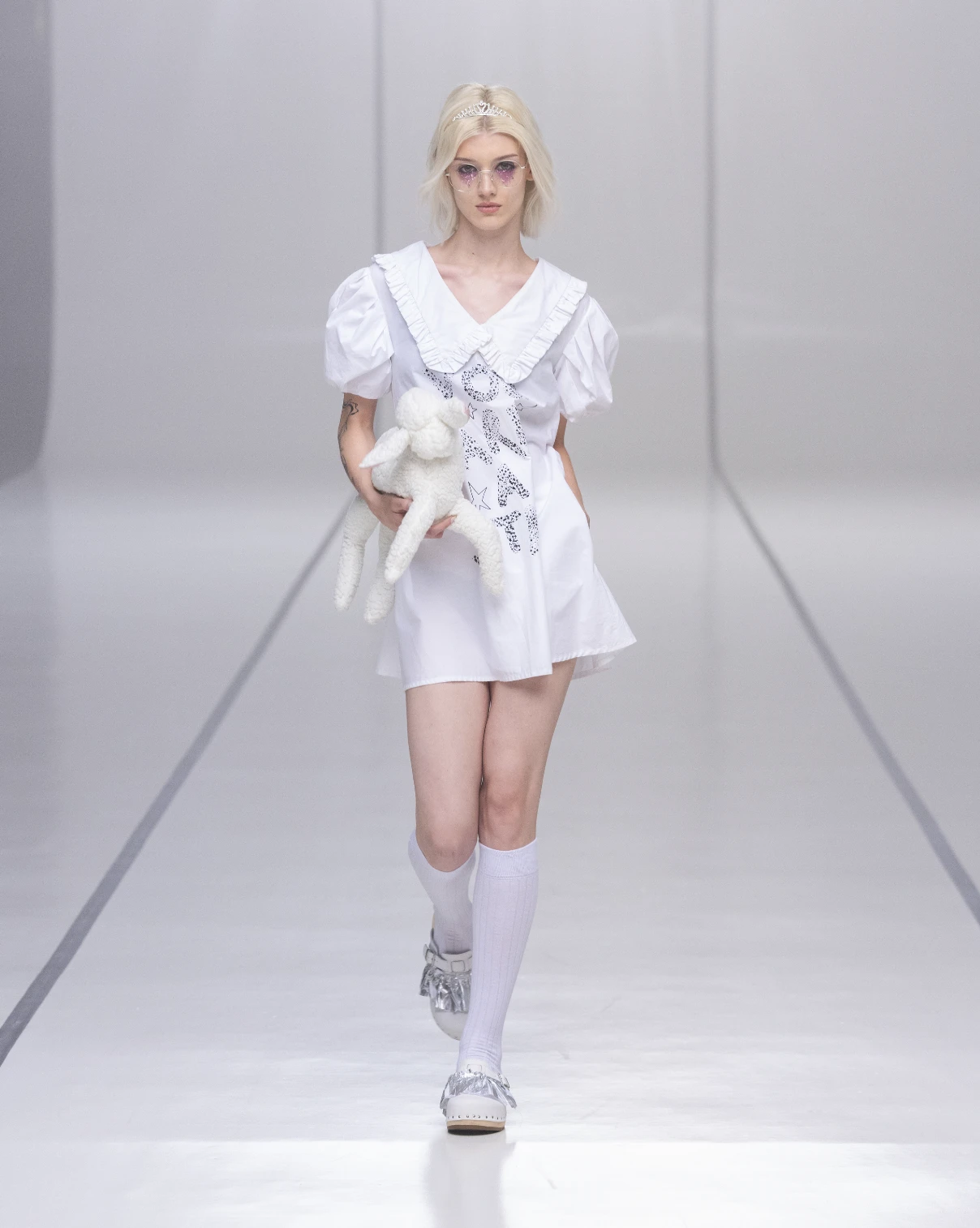
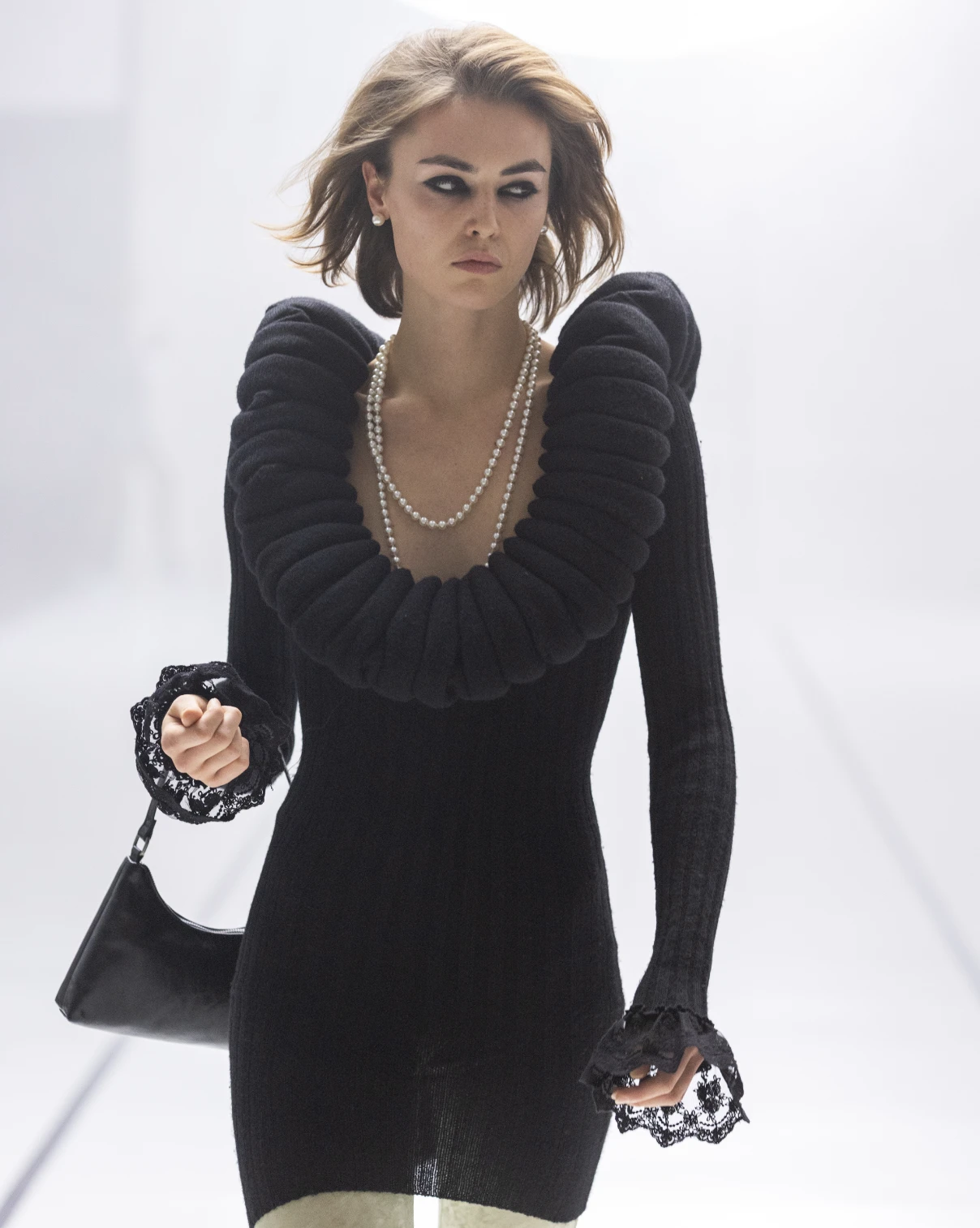
Sofia Coppola’s 2006 film Marie Antoinette, currently the subject of a retrospective at the Palace of Versailles, radiates a sense of youth and dreaminess. Given that Florentina Leitner has cited it as one of her favorite films, it’s easy to picture her being obsessed with it. Her models’ black-rimmed eyes are adorned with round glasses, tear streaks, glitter, completing looks of ruffled collars, flounces, puff sleeves and tiaras. Grown women carry plush toys, feet tucked into white hotel slippers. Infantilism as a stylistic choice – a signature Leitner shares with Coppola, who uses it as a means to explore isolation, loss of control, the patriarchal confinement of her young protagonists, producing a subversive girl gaze. The medium here is not film, but fashion – the garments we wear, and that wear us – the question of how it translates to an adult clientele lingers. “Nerdiness, but also dressing up as a princess” is how Leitner once described her formula. We’re excited to see more nerds and princesses, and congratulate her on the Fashion Award.
- Photo by :
- Mario Ilić
- Photo by :
- Mario Ilić
Laura Andraschko mixes precise Tailoring with an unbearable Attitude
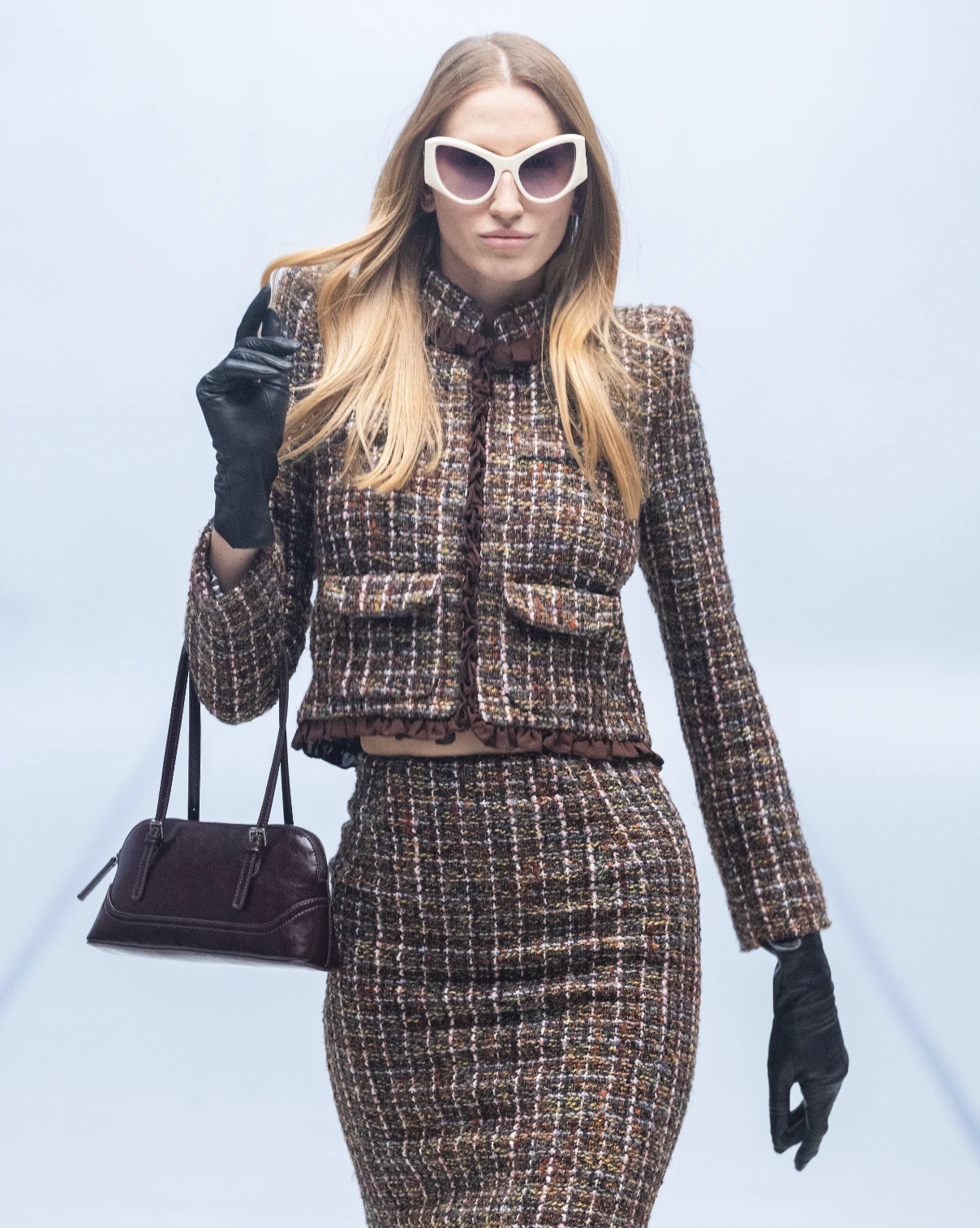
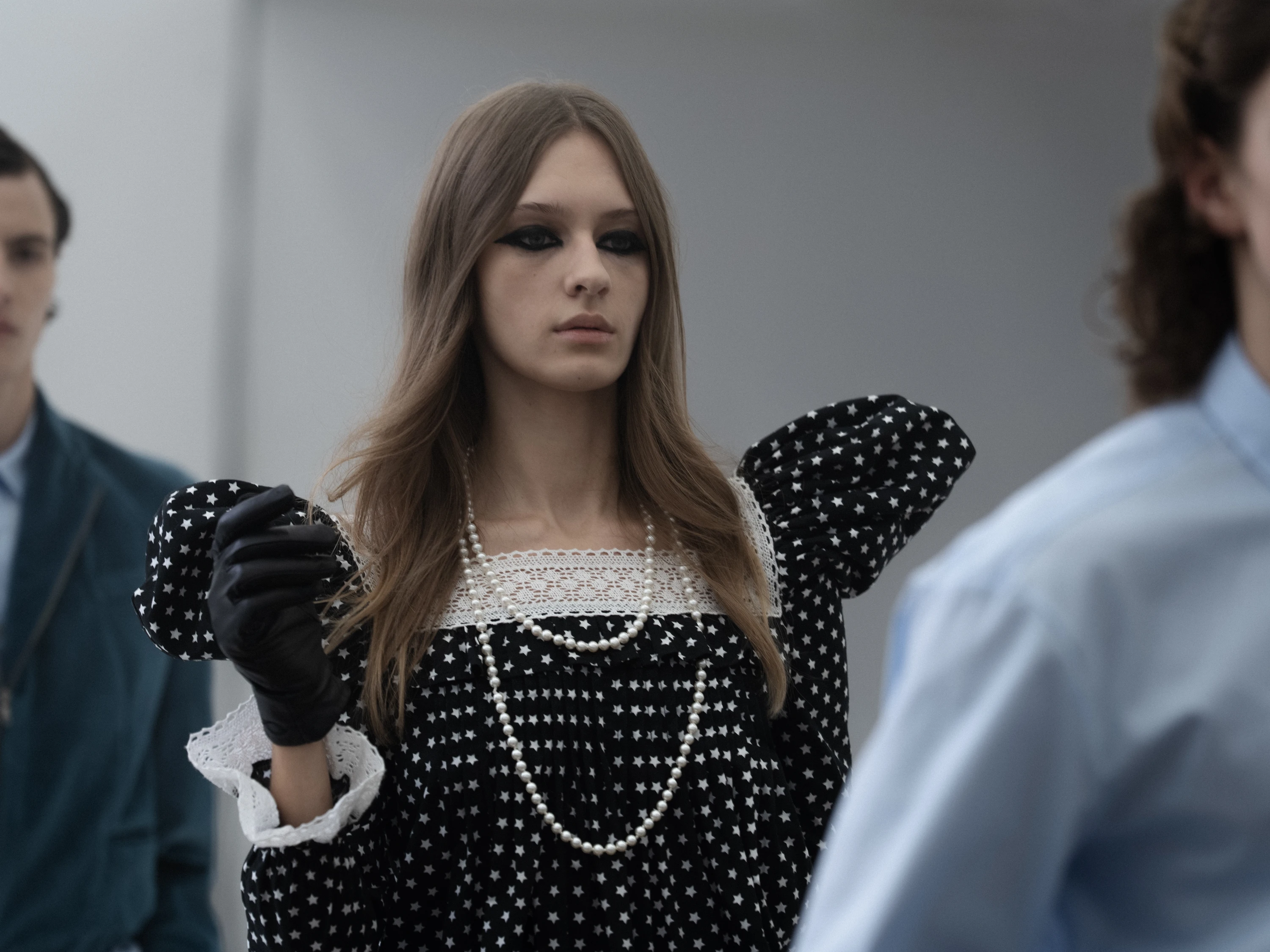
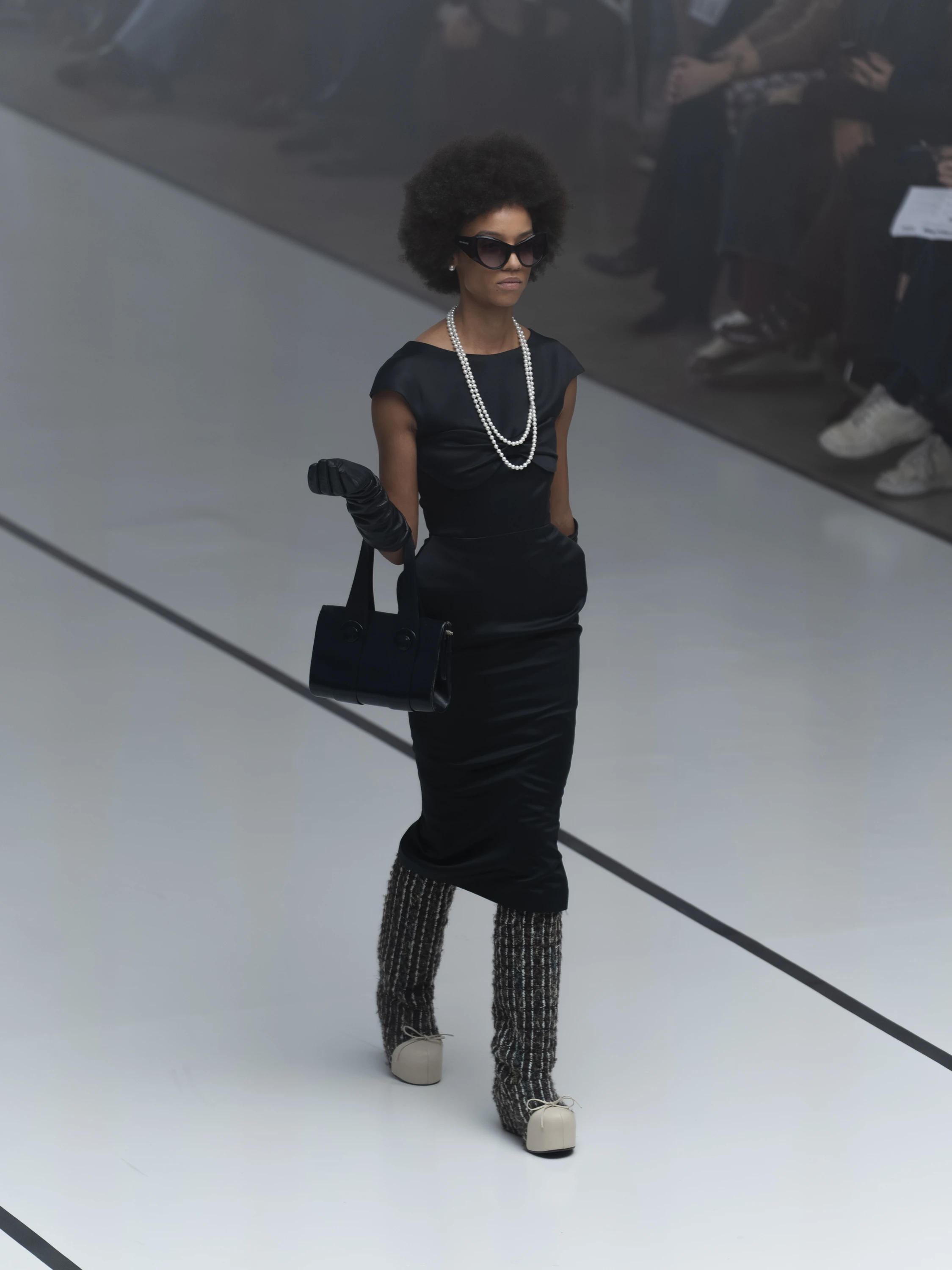
Laura Andraschko makes fashion by and for brats. She, too, gives plenty of room to the theme of adolescence, though here it struts down the runway in a distinctly campier, more self-referential way. With Andraschko – who won the Fashion Award of the City of Vienna last year – precise tailoring meets an unbearable attitude. It’s fashion that knows the inside of the Berghain toilet just as intimately as the chapel at Eton College. It’s fashion that is so heavily charged with pop-cultural references that you immediately want to see both Gossip Girl’s Georgina Sparks and Jennifer Coolidge wearing it. It’s fashion that throws its hands up in the air, and shouts, “Stop being poor” (with vocal fry, obviously). But when long legs in kitten heels meet tweed suits and pearl necklaces here in Vienna, it isn’t the new Chanel Cruise collection on display – it’s Andraschko’s game of references, rebellion, drama, and irony.
-
![Model walking down the runway in a Chanel-like costume]()
- Photo by:
- Mario Ilić
Oliver Kuzma designs for the effortless Agent
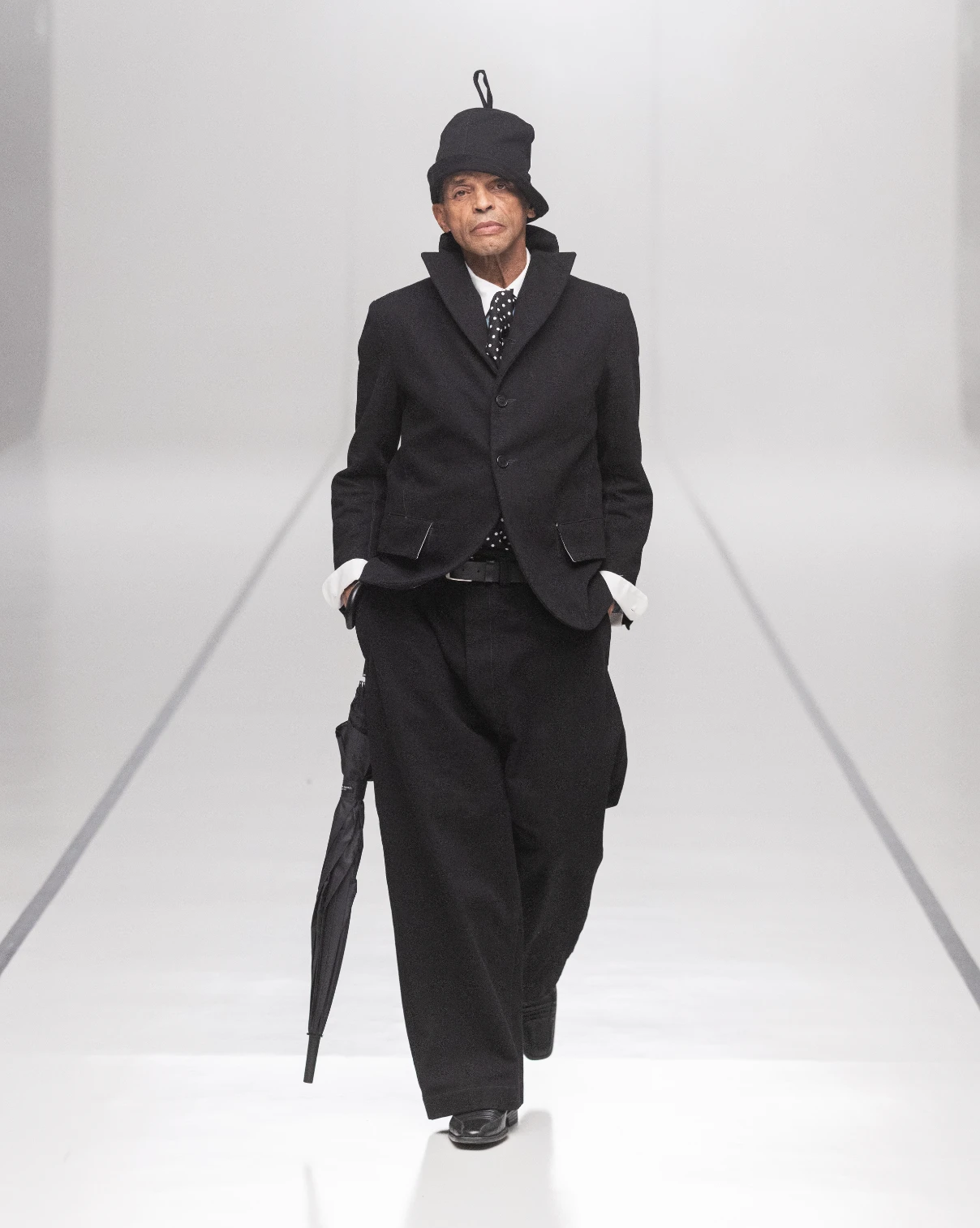
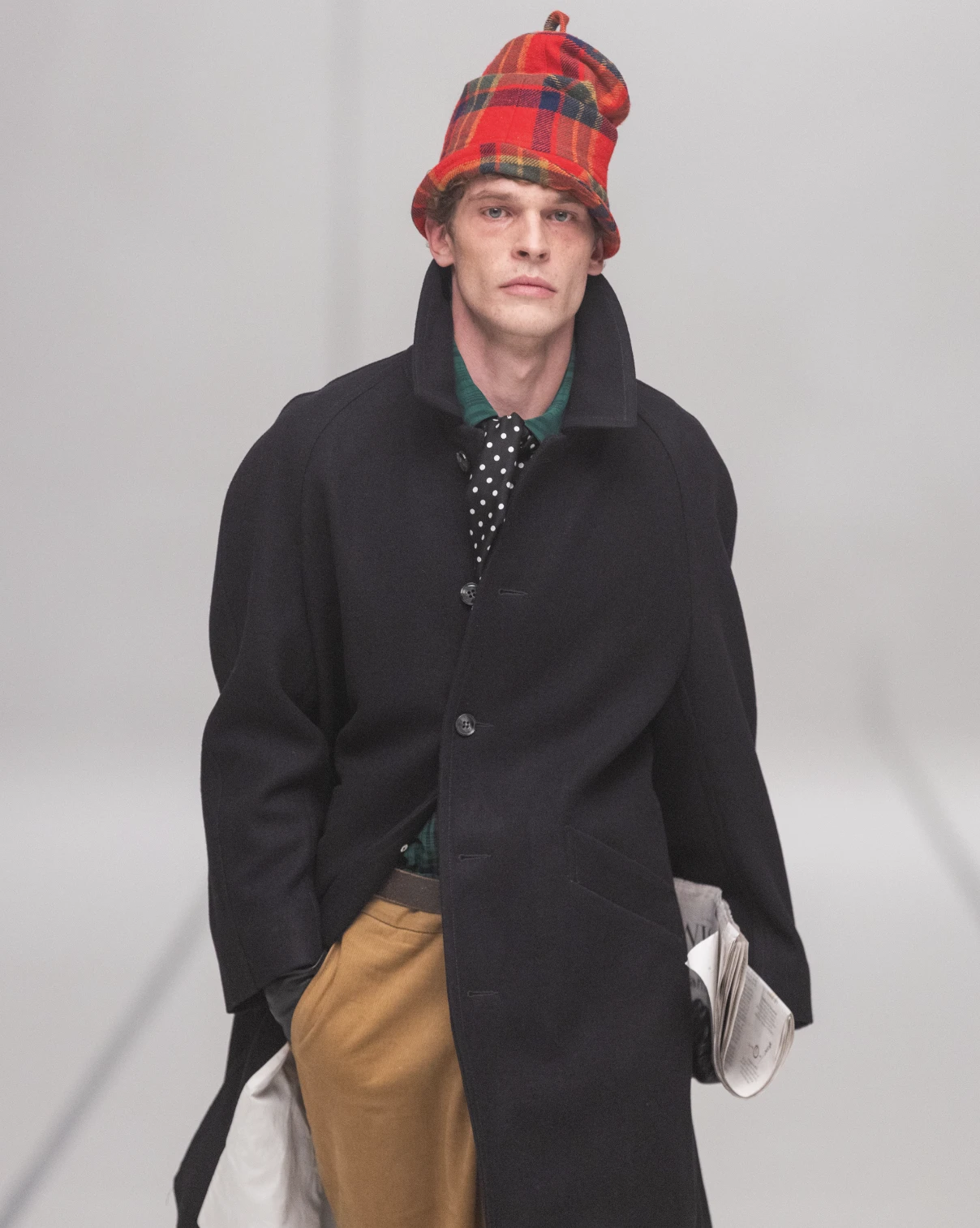
Oliver Kuzma’s presentation reads as decidedly more anachronistic: four looks showcase his keen sense for craftsmanship and timeless design. His pieces draw inspiration from Guy Ritchie’s crime comedies of charismatic agents in bespoke British suits – worn with the exact same effortlessness embodied by Kuzma’s cast. Sharp tailoring meets street swag meets Victorianism. Naturally, the right hat is essential: Kuzma’s headpieces are expressive without being loud, lending the wearer a distinguished authority without losing a gentle groundedness.
- Photo by:
- Mario Ilić
- Photo by:
- Mario Ilić
The ethos of the evening is distinctly “for us, by us,” and everyone in the room knows that. Yet the Austrian Fashion Association strives for international networking and exchange like few comparable European initiatives, firmly situating Austrian fashion within a context relevant globally. And it also creates spaces for encounter in the spirit of “from us, for everyone”: two days after the awards ceremony, designs from selected labels are opened up to the public in a showroom. The care and creativity with which national talent is staged here is truly inspiring. It is a rare reminder of what happens when cultural funding is treated not just as administration, but as a creative act in its own right.
Styling: Mauricio Nardi
Styling assistants: Pauline Collet and Jonathan Niederbrunner
Set design: TOR Studio
Key make-up artist: Naomi Gugler
Make Up Assistant: Parnia Sarraf
Make-up & products: MUD Studio
Hair: Rosa Karl