Upon her new book release, Ilona Hartmann sits down with vakuum to discuss her new novel "Junk".
Ilona Hartmann has long made a name for herself as a microblogger and journalist capturing the zeitgeist in a satirical, but unmistakably honest way across social media platforms and renowned publications. With her new book Junk, she proves for the third time that her gritty writing skills are not limited to non-fiction, following her debut Land in Sicht (2020) and Klarkommen (2024).
In Junk, we enter the head of an unnamed self-narrator, who has one week to pass before she receives results of an unspecified medical test. All we know is that the results of this test could alter her life drastically – think a terminal disease, a cancer diagnosis, you name it. Surrendered to their circumstances, the narrator decides to clean out their basement to pass the time and fight the feeling of powerlessness. For seven days, we enter their storage unit and follow them through anecdotes of memorabilia they find and the creeping realisation that their consumption habits and inability of letting things go might have transformed into a physical problem. That problem is not only stuffing every square centimeter of the unit, but is also covering up a larger issue they have to face.
After your third book release, do you see yourself primarily as an author or influencer?
Generally, I consider myself a writer. I wouldn’t really call myself an influencer, because I hardly do brand deals or co-ops, so I don’t profit off social media often. My full-time job is writing, and literature is one part of that. I write many other things too, publicly – and secretly.
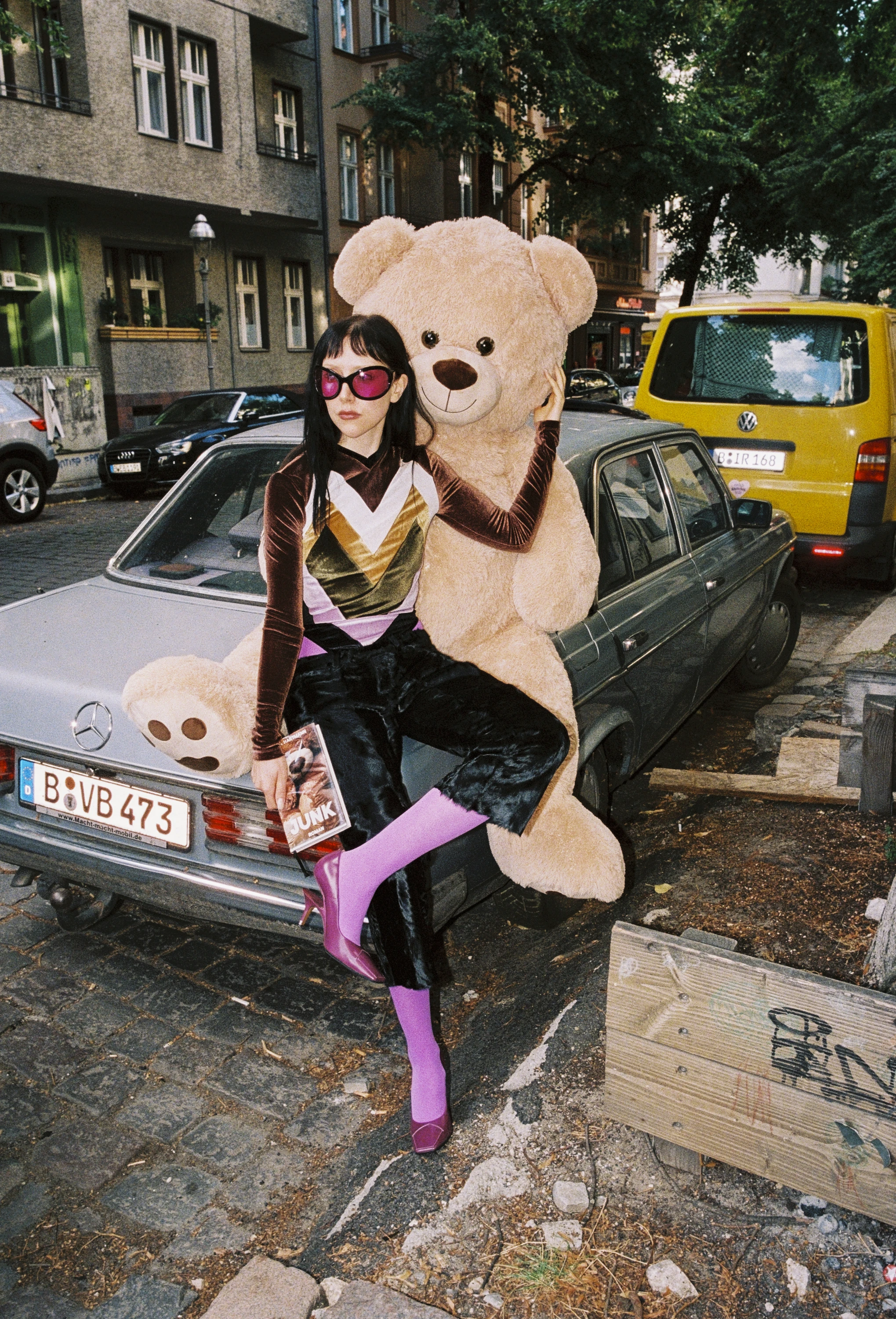
- Photography:
- Masha Stanic
- Styling :
- Theresa Groß
Compared to your previous books, what makes you feel most proud of Junk?
Mainly the fact of finishing a third book. That was such a “Wow, I really did that.” moment for me. It’s crazy. I mean, finishing one book is already crazy, and doing it one more time is even crazier, but then a third time? She really means it. Also, I feel like my writing process gets more structured and less frazzled or chaotic with every book. It doesn’t get easier, but it gets more coordinated in the hardship that it is.
Your writing style has previously been a bit frazzled, or rather unpolished, too. It reads like an inner monologue at times.
My writing and the way it sounds are coming from two different perspectives. On one hand, it really is my inner monologue, the way my thoughts sound. I try to translate that quite authentically onto my books, because this is the type of literature I like to read myself. Oftenly, it gives me the ick if literature sounds too constructed. I like to keep imperfections. But on the other hand, I always need some distance between me and my writing. I create that by editing it as much as I feel like it needs to be edited, in order to create an independent piece of work that’s not just my diary. It’s a process of merging – merging thoughts, characters, and events into a new thing, while still keeping my own sound along the way.
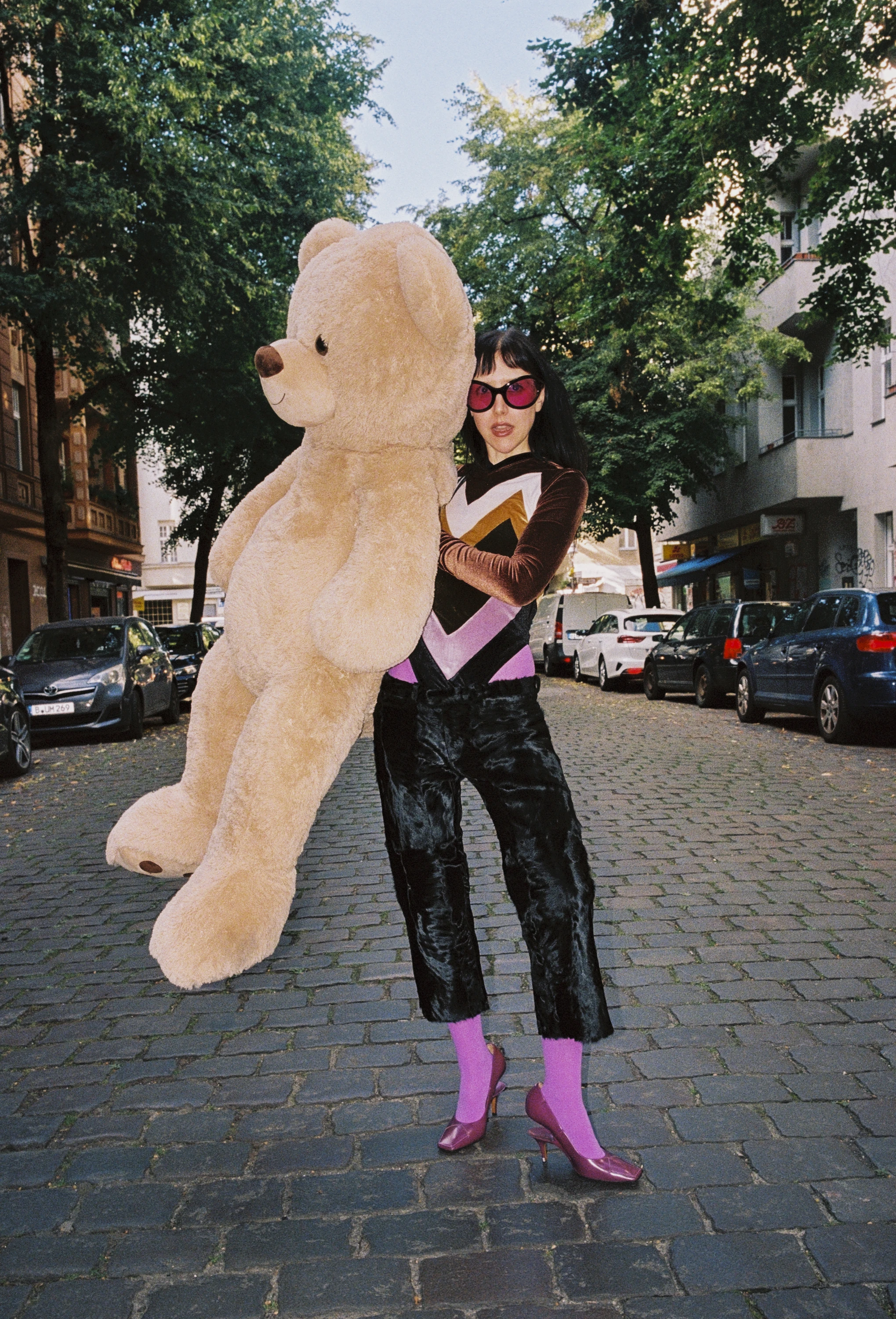
- Photography:
- Masha Stanic
- Styling :
- Theresa Groß
In Junk, you don’t specify the age or social circumstances of your protagonist. She doesn’t even have a name. What’s the reason your description of her is so vague? I’m using female pronouns, because she seemed like a woman to me.
I read her as a woman as well. I feel like that is correct. For the name, well, there is one very practical reason: I find it really hard to name figures in books. When writing, I feel like they don’t need a name. They are who they are, and I like to keep things as open as possible so that people can relate to them. I don’t want anybody getting the ick because the protagonist is named like their ex.
And age-wise, do you have a vision where she would be?
I feel like I’m tidying up after myself through writing, so the protagonists are usually a bit younger than me, like five to ten years. I look back at my own life at that age, and reflect on what my issues were back then. So she might be in her mid twenties.
The protagonists of your novels seem to have a common motivator: a longing for more, or a search for something they don’t have but need in order to feel fulfilled and become a person they want to be. They want to live a life they or others consider interesting. How much does this feeling affect you in what you’re doing?
It’s funny, the figures in my book really have that longing and are so confused. They don’t know where to go, what to do, and what life to live. Whereas I personally struggled with the opposite. I always knew exactly what I wanted next. Whether it happened or not, I knew what I wanted. I often ended up disappointed, because the things I was sure about did not happen. So maybe that longing comes from my disappointment of knowing what I want and not getting it, which then left me feeling confused. Maybe it’s my way of handling the disappointments of real life.
-
![Kein Alt-Text hinterlegt.]()
sponsored by Polaroid
- Photography:
- Julius Rueckert
- :
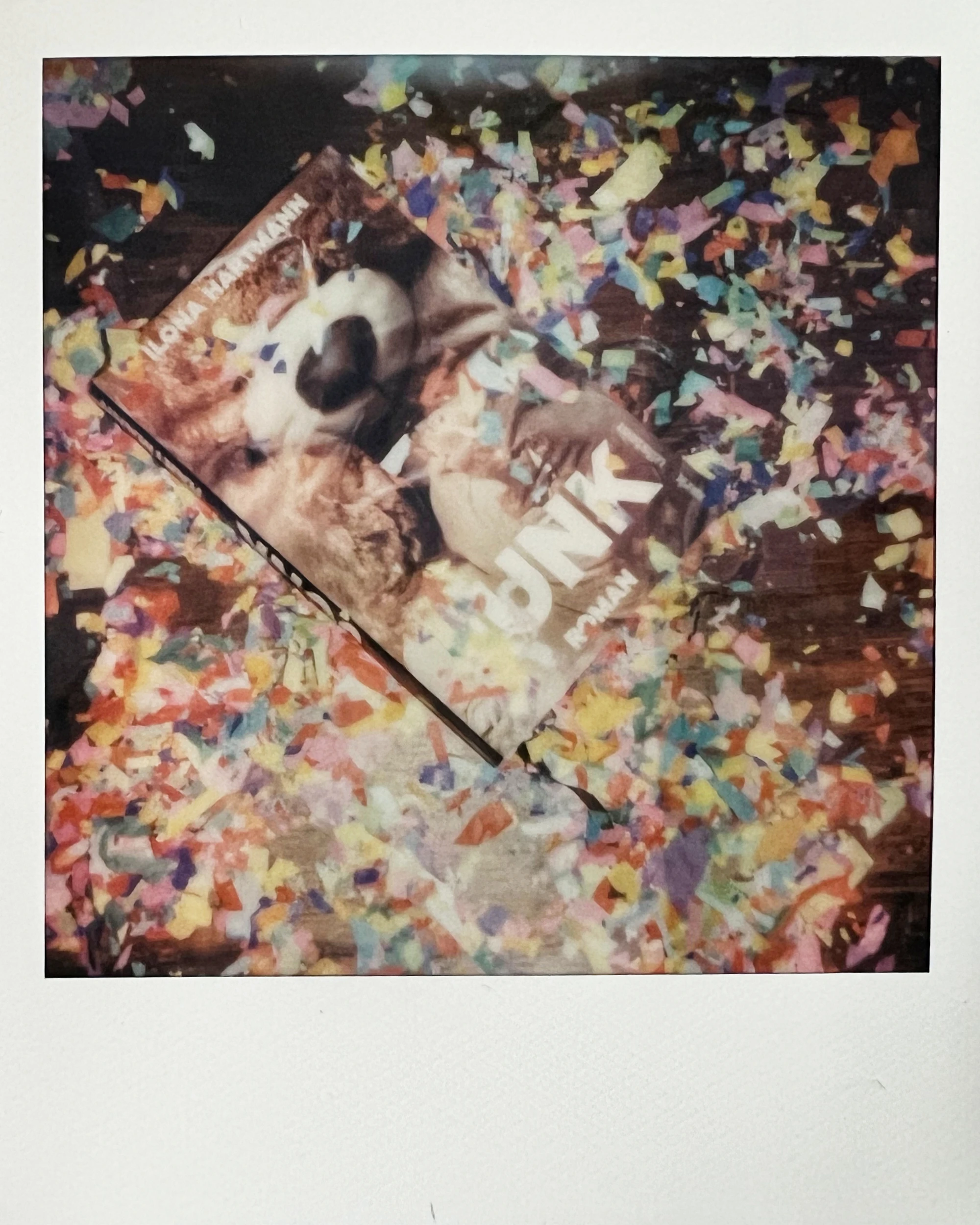
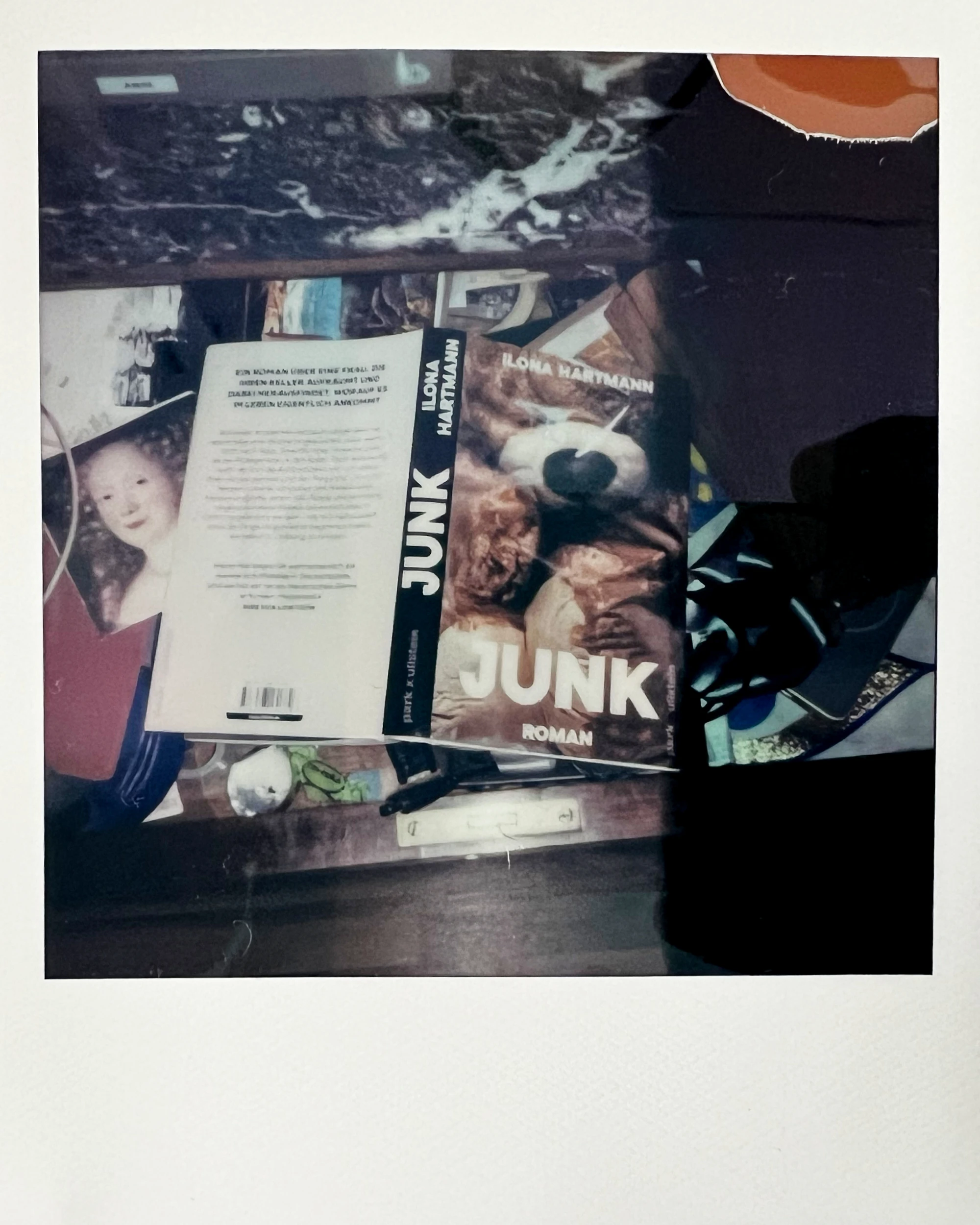
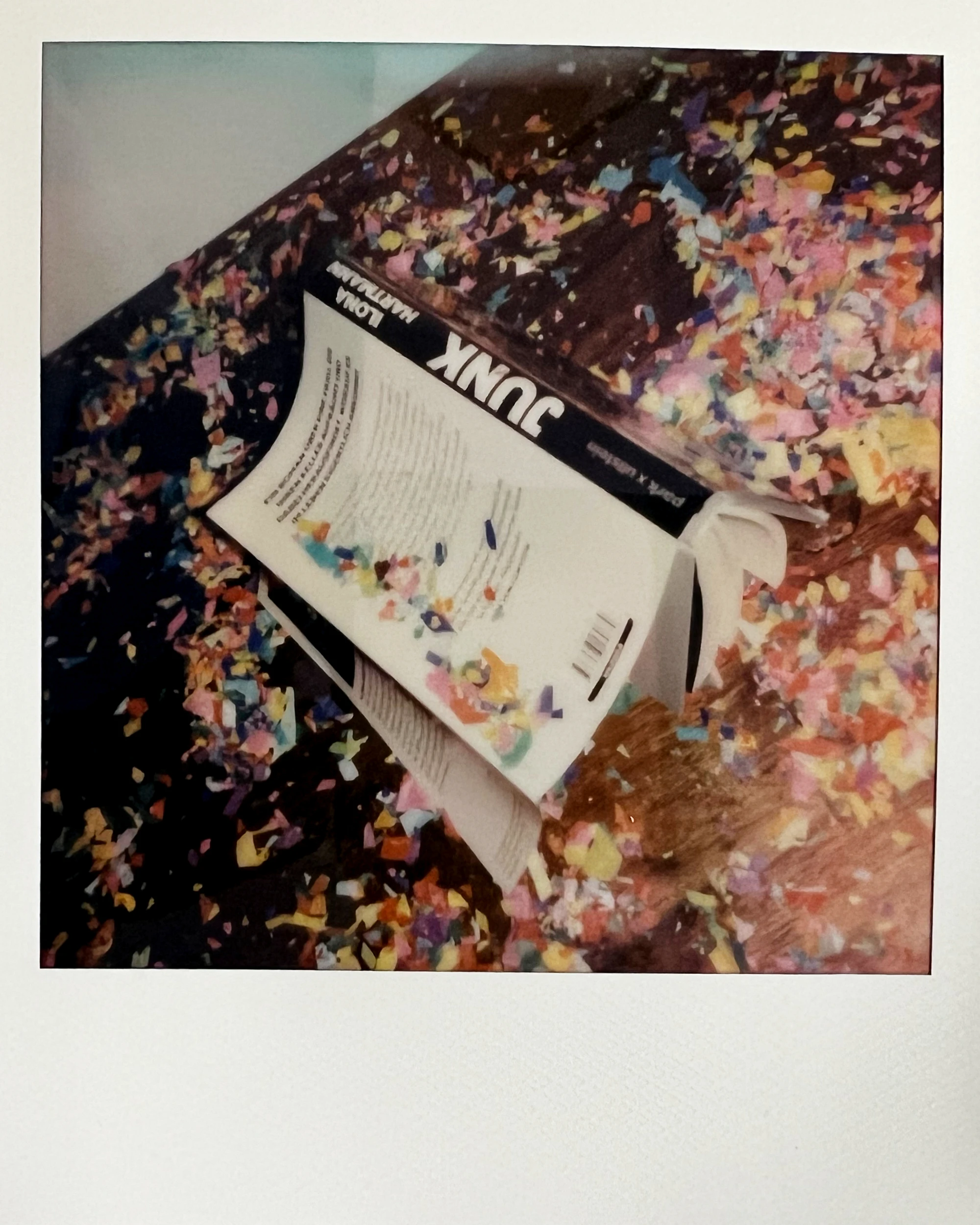
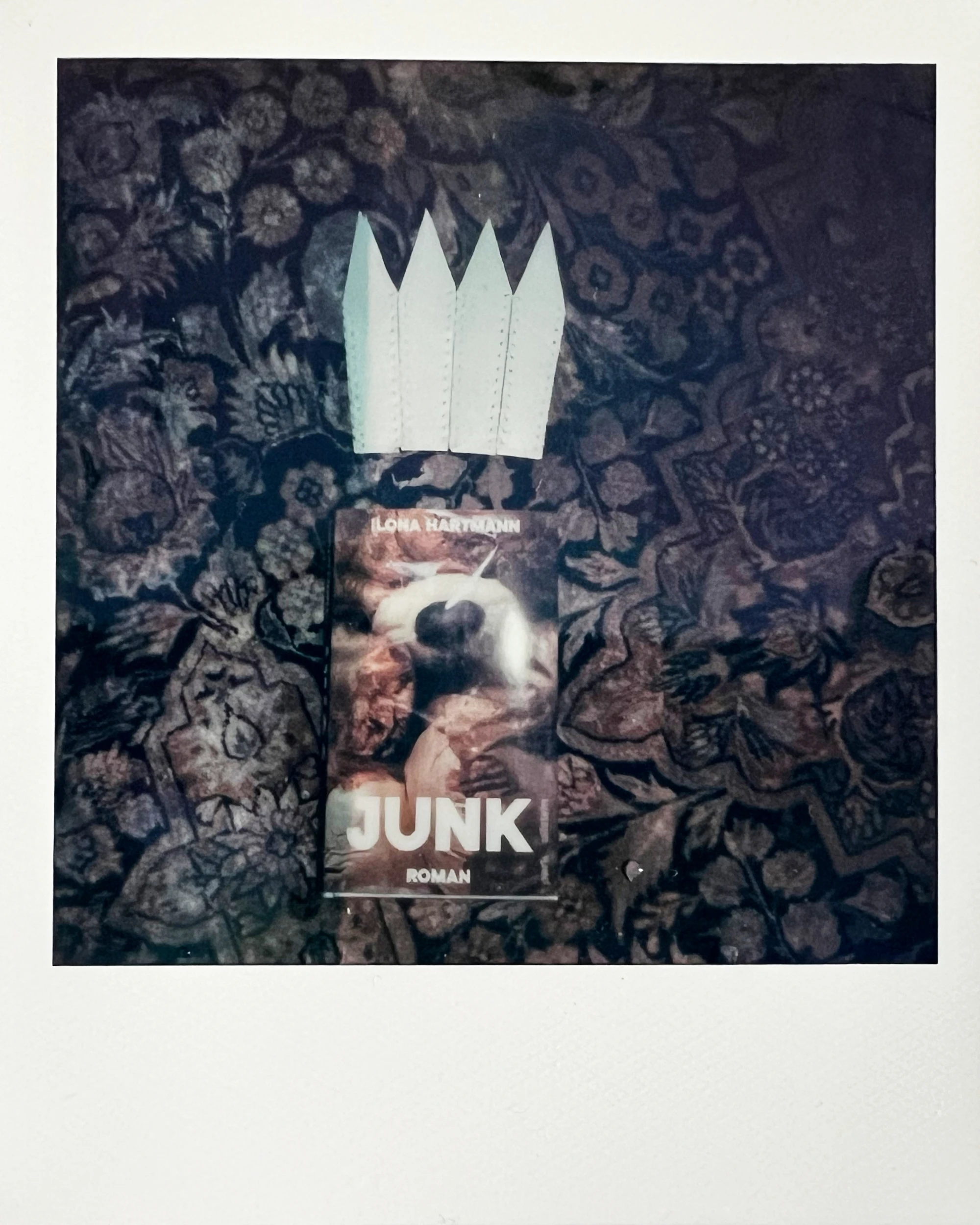

The protagonist in Junk tries to fill her void with seemingly mindless consumerism. You’re targeting a larger societal problem here, and you’re even mentioning social media, and the relation between algorithms and impulse buys. That really stood out to me, since the previous novels were operating on a more individual level emotionally. What made you choose a larger societal topic like this as a focal point of your novel?
It happened somewhat automatically when I thought about consumption and the way individual consumerism is connected to the greater scheme of it all. I felt like I couldn’t leave it out, I can’t talk about a person who is compulsively buying numerous new personalities, without knowing what to do with them, and not target the ecosystem that makes her do that, and that makes her feel like she has to do that.
What sets Junk apart from klarkommen and Land in Sicht?
I feel like Junk has a more dominant product level. It’s much more entangled with the zeitgeist and concrete items and things, rather than people, which as a writer, I find an interesting structure. Junk is more textured as well, as it moves in a diverse environment between the past, the present, and the future. It’s uncertain, and it’s getting really dark at some points, and in other ways, it’s really light. For me, it has more amplitude. It’s the logical consequence after klarkommen to go one step further, go deeper, to actually go downstairs in the basement, and to look at things more seriously, but also more grateful. I would say Junk is very demure and very mindful.
Which book is your favorite so far?
You can’t ask that! (laughs)
They’re all equally perfect and imperfect in many ways, and I am so grateful that I get to do this for a living. It’s just unbelievable to me that I have written three books by now. A friend of mine sorted them into the mausig/atzig/fotzig matrix recently, and they’re actually all somewhere else.
- Photography:
- Masha Stanic
Last question: What’s the most random piece of memorabilia you keep?
In almost every pocket of every jacket, I have either a leaf, a twig, or a flower. When I go for walks, meet with someone, or go places that I’ve never been before, I like to take something with me and put it in my pocket. I have a junk journal – of course – and I want to put them in there, but most times I just forget about them, so all of my pockets are full of little lavender blossoms, twigs, or crunchy, dried up leaves. I actually started a herbarium to put the dried ones in there when I find them, with notes where and when I got them. Most of them are probably labelled incorrectly.
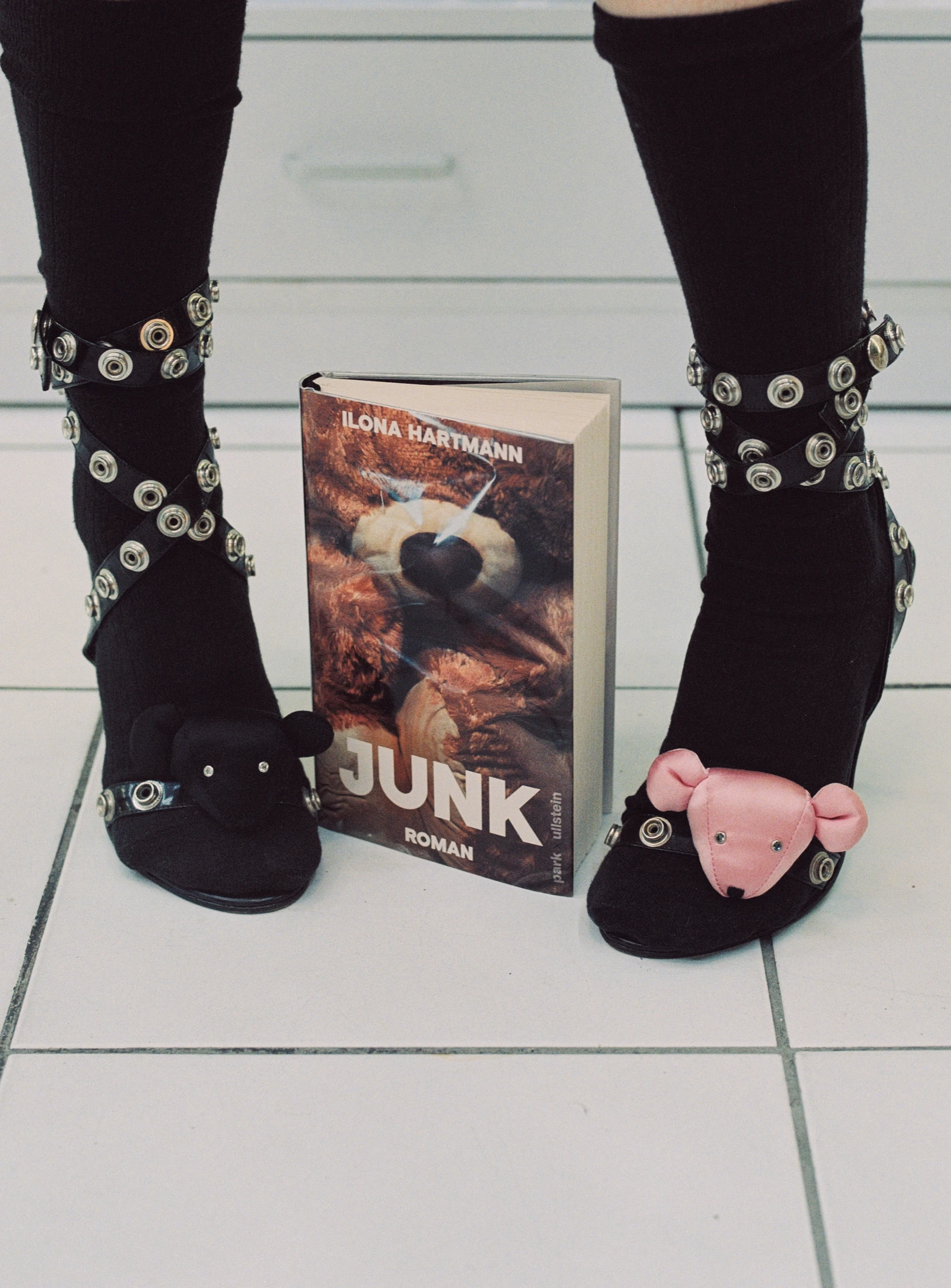
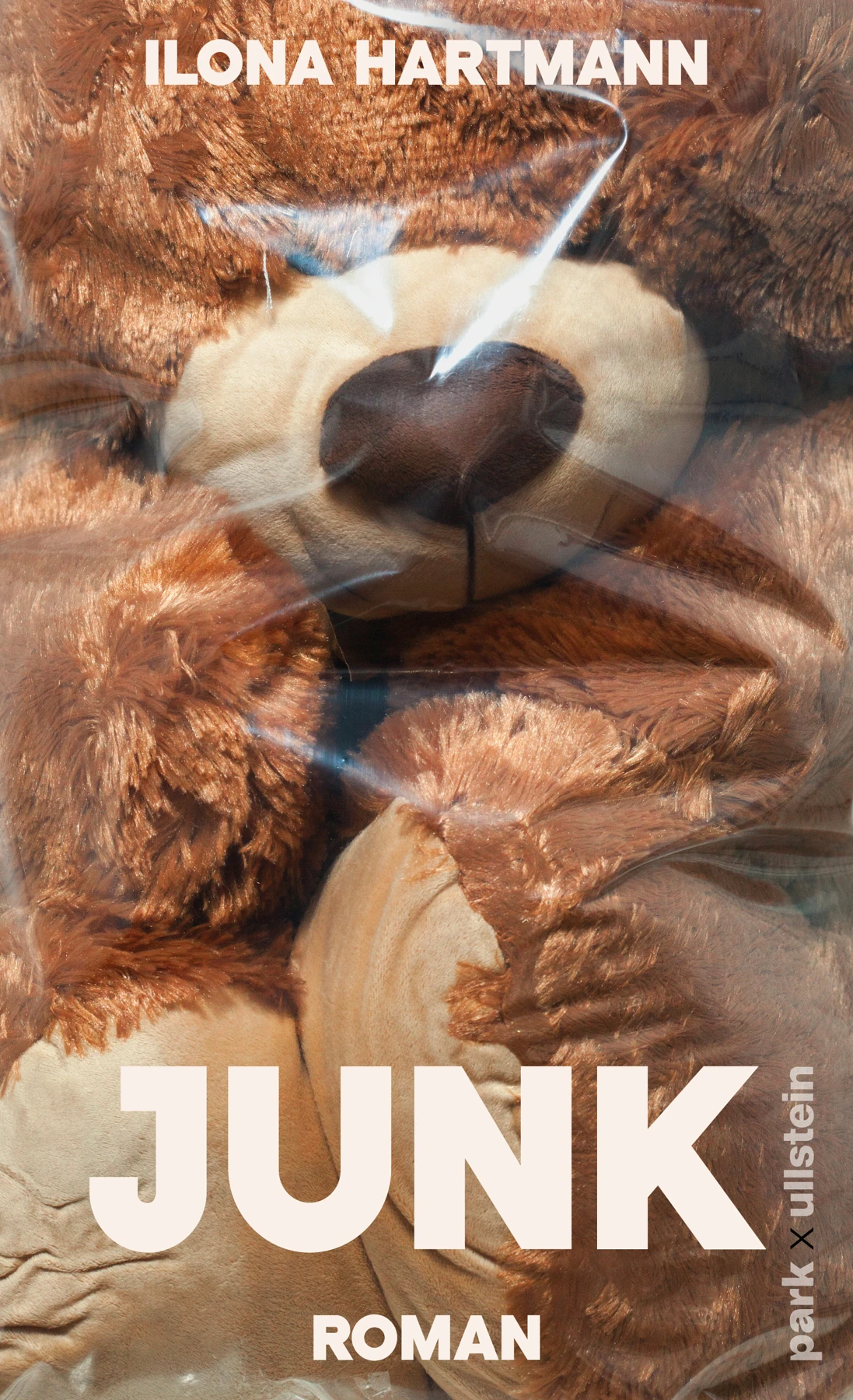
Junk is published by Park x Ullstein and now available in bookstores.
Junk: Roman | Ein Roman über die Angst vor dem, was kommt, und die überraschende Versöhnung mit dem, was war
 22 € via Amazon